Book Your Tour
Why Book With Us?
- No-hassle best price guarantee
- Customer care available 24/7
- Hand-picked Tours & Activities
- Free Travel Insureance
Get a Question?
Do not hesitage to give us a call. We are an expert team and we are happy to talk to you.
14 Days Grand Morocco Tour from Casablanca
- 14 Days / 13 Nights
- Starts in Casablanca
- Ends in Marrakech or Casablanca
The 14 Days Grand Morocco Tour from Casablanca is the ultimate Morocco itinerary designed to explore the country’s imperial cities, Sahara Desert, Atlas Mountains, Atlantic coast, and UNESCO heritage sites. This private Morocco tour starts in Casablanca and covers the most iconic destinations including Rabat, Chefchaouen, Fes, Merzouga Desert, Todra Gorges, Ait Ben Haddou, Marrakech, and Essaouira.
This 14-day Morocco itinerary from Casablanca is perfect for travelers who want a complete cultural experience, combining history, adventure, desert landscapes, and authentic Moroccan traditions. From camel trekking in the Sahara to guided tours in ancient medinas, this Grand Morocco tour offers an unforgettable journey across North Africa’s most diverse country.
Whether you are looking for a Morocco desert tour, an imperial cities tour, or a comprehensive Morocco travel package, this 14-day private tour covers it all.
Itinerary
Your grand Moroccan adventure begins in the country’s economic beating heart, Casablanca. Upon your arrival at Mohammed V International Airport, our professional team will greet you and provide a seamless transfer to your hotel. Casablanca is a fascinating metropolis where the grandeur of French colonial architecture meets the spiritual depth of Islamic traditions and the fast-paced energy of a modern African hub.
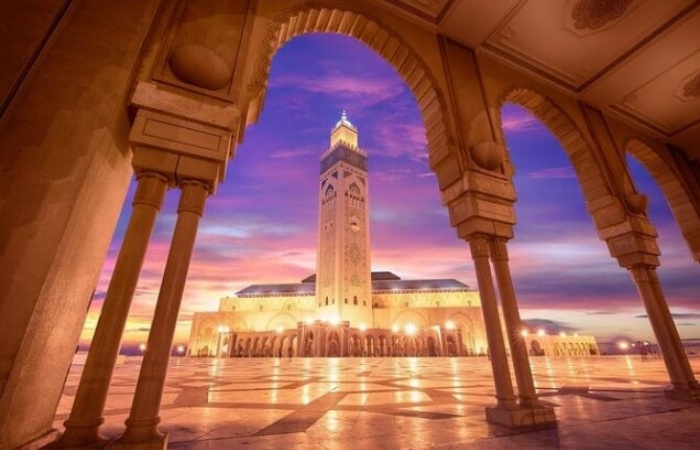
The absolute highlight of your first day is a guided visit to the Hassan II Mosque. This architectural masterpiece is not only one of the largest mosques in the world but also a rare gem that welcomes non-Muslim visitors. Built partly over the Atlantic Ocean, the mosque features a 210-meter minaret—the tallest of its kind—and is adorned with breathtaking Moroccan craftsmanship. You will marvel at the intricate zellige tilework, hand-carved cedar wood, and polished marble floors that showcase the peak of Moroccan artistry. Walking across its vast esplanade, you’ll feel the refreshing sea breeze while admiring the scale of this national monument.
After the mosque, we will take a scenic drive along the Ain Diab Corniche, a popular seaside promenade where locals gather to enjoy the ocean views. We will also pass through the Habous District, often called the “New Medina.” Built in the 1920s by the French, it offers a cleaner, quieter version of a traditional Moroccan market, filled with charming bookstores, olive markets, and artisanal copper shops. This first day is designed to be a gentle introduction to the kingdom, allowing you to soak in the Atlantic atmosphere before we head north on our 14-day journey.
On the second day, we leave the bustle of Casablanca behind and travel north to Rabat, the elegant administrative capital of Morocco. Rabat is a UNESCO World Heritage city that perfectly balances ancient history with modern greenery. Our exploration starts at the iconic Hassan Tower, the red sandstone minaret of an incomplete 12th-century mosque. Standing directly across from it is the Mausoleum of Mohammed V, a stunning example of modern Alaouite architecture that houses the tombs of the current King’s father and grandfather.
Next, we step into the Kasbah of the Udayas, a 12th-century fortress perched on a cliff. Its narrow, winding streets are painted in striking blue and white, leading to a peaceful Andalusian garden and a terrace with panoramic views of the Bouregreg River and the Atlantic Ocean. It feels like a village within a city, offering a quiet escape from the urban center. After a traditional lunch in the capital, we continue our drive toward the legendary city of Tangier, the gateway between Africa and Europe.
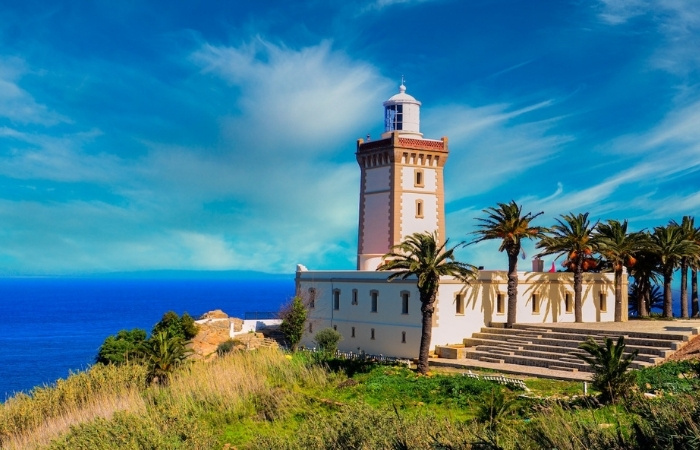
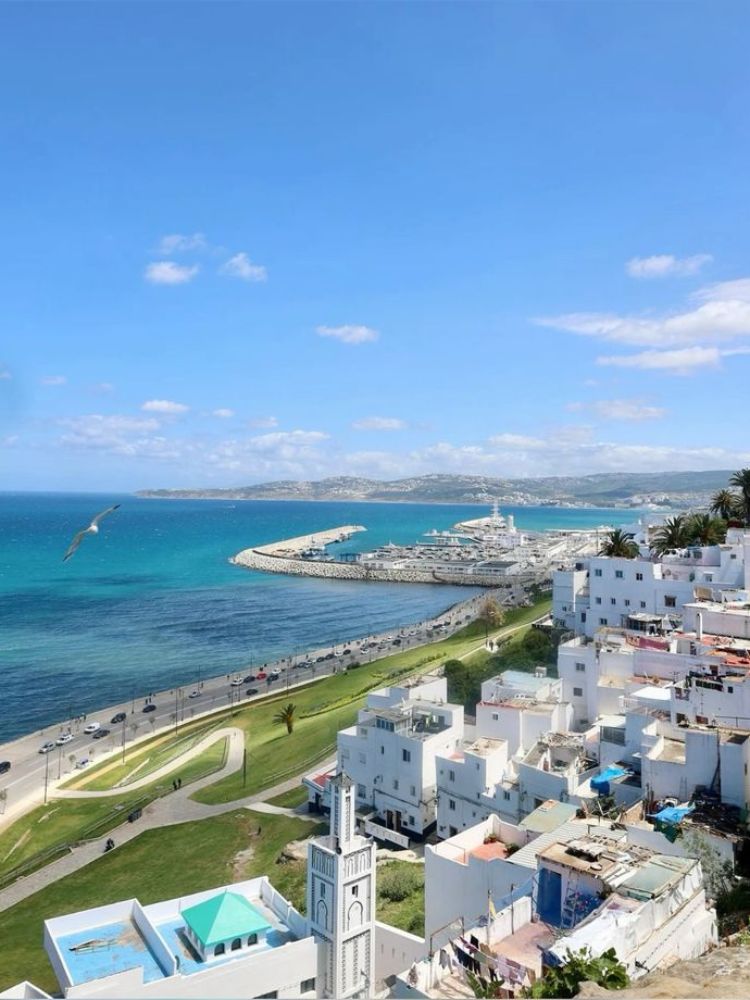
Tangier has a unique, cosmopolitan history, having served as an “International Zone” for much of the 20th century, attracting writers, spies, and artists like Henri Matisse. Upon arrival, we will visit Cape Spartel, the most northwestern point of mainland Africa, where the turquoise waters of the Atlantic meet the deep blue of the Mediterranean. Nearby, we explore the Hercules Caves, where according to myth, the hero rested after separating the two continents. We conclude the day by settling into your hotel, where you can watch the lights of Spain glimmer across the Strait of Gibraltar.
After breakfast overlooking the Mediterranean, we dive into the Medina of Tangier. We’ll walk through the Grand Socco and Petit Socco, vibrant squares that once buzzed with the energy of global trade and diplomacy. From there, we depart for Tetouan, known as “The White Dove.” This city is famous for its strong Hispano-Moorish influence, brought by refugees from Andalusia centuries ago. Its medina is one of the most authentic and untouched in Morocco, offering a glimpse into a world of hidden courtyards and master leather craftsmen.
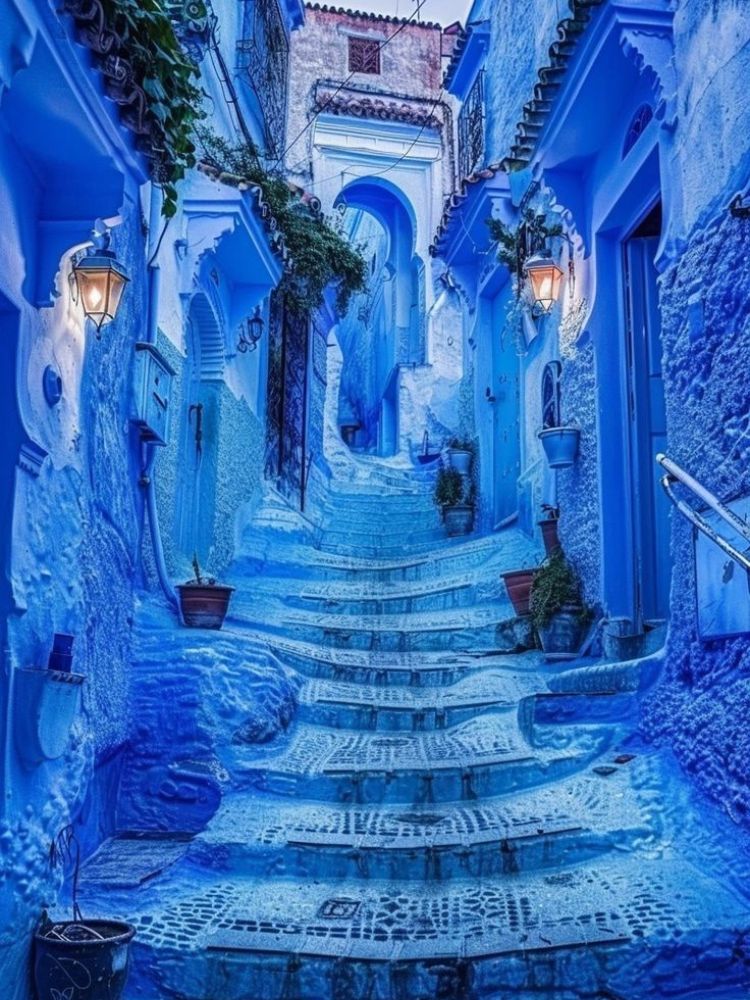
In the afternoon, the landscape changes as we ascend into the rugged Rif Mountains to reach the most photographed town in the country: Chefchaouen. As you approach, the sight of the city’s blue-washed buildings clinging to the mountainside is truly magical. This “Blue Pearl” was founded in 1471 as a fortress, and its famous color—ranging from pale sky blue to deep indigo—was traditionally used to symbolize the sky and heaven, though it also serves as a natural cooling agent and insect repellent.
We begin our immersion at Place Outa el-Hammam, the main square in the heart of the medina. Surrounded by cafes and restaurants, the square is dominated by the red-walled Kasbah and the Great Mosque. It is the perfect spot for people-watching while sipping hot mint tea. Before the day ends, we will take a short, scenic hike up to the Spanish Mosque located on a hilltop. From this vantage point, you will witness a breathtaking sunset over the entire blue city, watching the lights flicker on as the call to prayer echoes through the valley. You will spend the night in a traditional Riad, experiencing authentic mountain hospitality.
The fourth day of your grand tour is dedicated to a deep immersion into the serene atmosphere of Chefchaouen. Known globally as the “Blue Pearl,” this mountain village is more than just a photo opportunity; it is a place of profound history and unique Rif Berber culture. After a traditional breakfast of local goat cheese, olive oil, and fresh bread, we begin our walking tour through the labyrinthine medina. Every corner of Chefchaouen offers a new shade of blue, from cobalt and indigo to baby blue and periwinkle.
We will visit the Kasbah Museum, an 11-building fortress located in the heart of the town. Built by Moulay Ali Ben Moussa in the 15th century, its lush gardens and ethnographic museum provide a window into the region’s resistance against Spanish and Portuguese invaders. From the Kasbah towers, you can see the red-tiled roofs contrasting beautifully with the blue walls below.
As we wander deeper into the residential quarters, you will observe the daily life of the “Chaouenis.” You’ll see women in traditional striped foutas (Rif woven cloths) and children playing in the narrow alleys. We will stop at the Ras El Ma spring, where the cold mountain water gushes out of the limestone rock. This is the social heart of the town, where locals still gather to wash clothes and socialize by the riverside cafes. The afternoon is yours to explore at your own pace—perhaps to shop for unique local handicrafts like wool garments and woven blankets that you won’t find anywhere else in Morocco. Whether you choose to hike further into the Rif Mountains or simply sit in a café and watch the world go by, Chefchaouen will leave an indelible mark on your soul.
Today, we journey south from the mountains toward the imperial history of the plains. Our first major stop is Volubilis, the best-preserved Roman ruins in Morocco and a UNESCO World Heritage site. Dating back to the 3rd century BC, this was once the remote outpost of the Roman Empire. As you walk along the Decumanus Maximus, you will see remarkably intact mosaics depicting scenes from Greek mythology, grand triumphal arches, and the remains of the Basilica. It is a powerful reminder of Morocco’s diverse Mediterranean heritage.
Just a short drive away lies Meknes, the “Versailles of Morocco.” Founded by Sultan Moulay Ismail in the 17th century, Meknes was designed to rival the court of Louis XIV. We will stand before the monumental Bab Mansour, arguably the most beautiful gate in North Africa, adorned with intricate green and blue zellige tiles. We also visit the Mausoleum of Moulay Ismail and the massive Heri es-Souani, the royal granaries and stables that once housed over 12,000 horses. The scale of the architecture here reflects the ambition of one of Morocco’s most powerful rulers.
Finally, we continue our drive to Fes, the spiritual and intellectual capital of the kingdom. As the sun begins to set, we will arrive at your Riad in the heart of the old city. Fes is home to the world’s oldest continuously operating university and a medina that has remained largely unchanged for over 1,000 years. After a long day of historical exploration, you will enjoy a traditional Fassi dinner, known for its sophisticated blend of sweet and savory flavors, preparing you for the deep dive into the medieval streets tomorrow.
Prepare to step back into the Middle Ages as we explore Fes El-Bali, the world’s largest car-free urban area. With over 9,000 narrow alleys, a local guide is essential to navigate this living museum. Our journey starts at the Royal Palace Gate with its seven golden doors, followed by a panoramic view of the medina from the Southern Tower, offering a breathtaking perspective of the sprawling cityscape and its hundreds of minarets.
We enter the medina through the famous blue gate, Bab Boujloud. Inside, your senses will be overwhelmed by the scent of spices, the sound of copper beaters, and the vibrant colors of silk. We visit the Al-Qarawiyyin University, founded in 859 AD by Fatima al-Fihri, and the Bou Inania Madrasa, an architectural masterpiece of Merenid craftsmanship featuring stunning stucco and cedar wood carvings. We will also stop at the Nejjarine Museum of Wooden Arts and Crafts, housed in a beautifully restored 18th-century caravanserai.
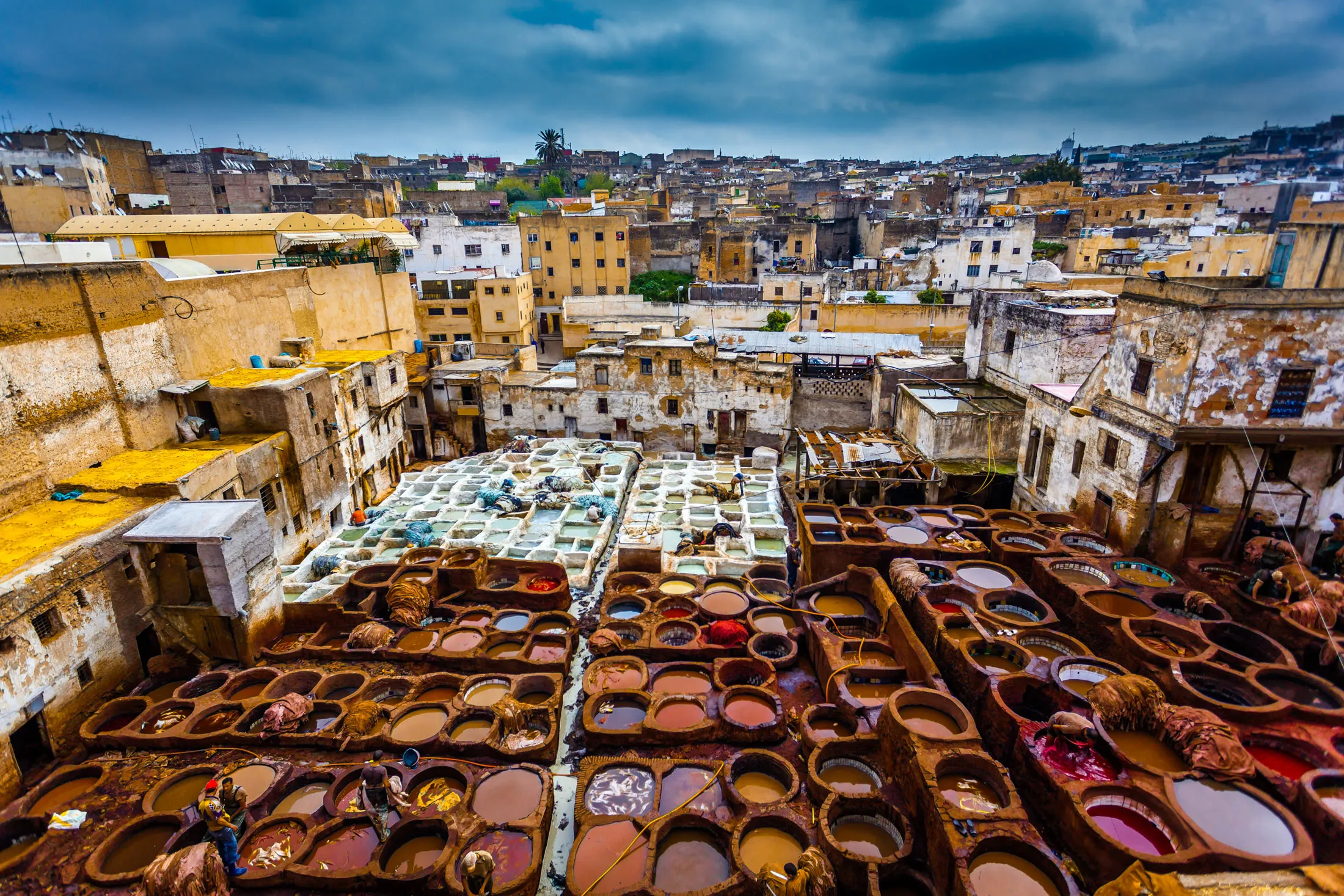
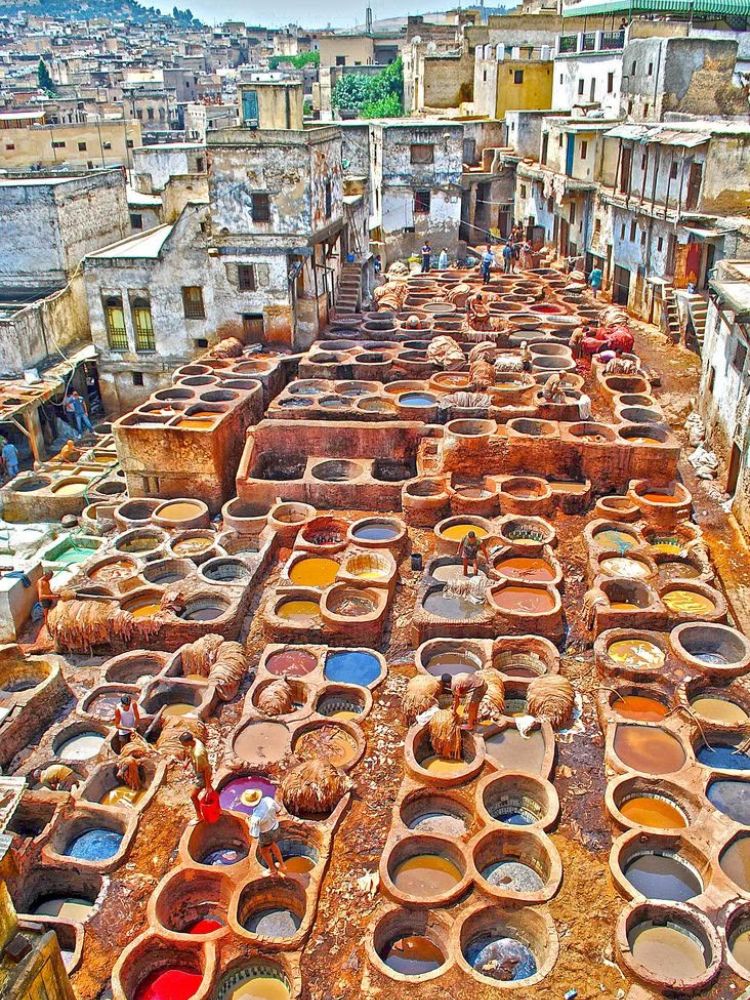
The highlight for many is the visit to the Chouara Tannery, the oldest in the world. From a nearby terrace, you can watch workers treating hides in stone vats filled with natural dyes, using techniques that have remained unchanged for centuries. You will also see the weavers at work and the intricate process of creating Fassi pottery and zellige. Fes is the best place in Morocco to buy high-quality leather goods, carpets, and ceramics directly from the artisans. The day ends with a peaceful evening in your Riad, reflecting on the incredible layers of history you have witnessed in just a few square miles.
We leave the imperial cities behind for a dramatic change of scenery as we cross the Middle Atlas Mountains. Our first stop is Ifrane, often called “Little Switzerland.” Built by the French in the 1930s as a ski resort, its alpine-style architecture and tidy parks are a surprising contrast to the rest of Morocco. Nearby, we drive through the vast Cedar Forests of Azrou, where we will likely encounter the friendly Barbary Macaques (monkeys) that inhabit the area. It is a beautiful, green start to a long day of travel.
As we continue south, we cross the Ziz Valley, where thousands of palm trees create a lush green ribbon through the arid landscape. We pass through Midelt, known as the apple capital, and begin our descent toward the edge of the Sahara. The air becomes warmer, and the horizon opens up as we approach Erfoud, famous for its prehistoric fossils. Here, you can visit a local workshop to see how 500-million-year-old fossils are extracted from the rock and polished into beautiful marble slabs and decorative items.
As the late afternoon sun begins to cast long shadows, we reach Merzouga, the gateway to the Erg Chebbi dunes. Here, your “desert ship”—a camel—awaits you. You will trek across the golden sands as the sun sets over the towering dunes, turning the landscape into shades of orange and purple. We arrive at our luxury desert camp nestled in the heart of the dunes. After a traditional Berber dinner under a sky filled with millions of stars, we gather around a campfire to enjoy the rhythmic drumming and songs of the local nomads. This is a night of absolute silence and magic, far away from the modern world.
Waking up early in the Sahara is a must to witness one of the most beautiful sunrises in the world. After breakfast at the camp, we begin an off-road 4×4 tour of the Merzouga region. We visit the village of Khamlia, inhabited by descendants of former slaves from sub-Saharan Africa. Here, you will experience the soulful Gnaoua music, a spiritual and rhythmic performance that is a vital part of the desert’s cultural identity. You will have the chance to sit with the musicians, learn about their history, and even try playing some of the instruments.
Next, we drive into the “black desert” to meet a nomad family living in traditional wool tents. This is a humbling experience that allows you to see how people have survived in this extreme environment for generations. We will share a cup of tea and learn about their daily routines, livestock, and desert traditions. We also visit the abandoned mines of M’ifis, where lead and zinc were once extracted, and take in the panoramic views of the entire Erg Chebbi dune system stretching toward the Algerian border.
In the afternoon, you have free time to enjoy the dunes at your leisure. For those seeking more adventure, you can try sandboarding down the steep slopes or rent a quad bike for a high-energy ride through the sand. Alternatively, you can simply relax at your hotel or camp, enjoying the peacefulness of the Sahara. As night falls, we enjoy another delicious dinner and perhaps another night of stargazing. The Sahara is one of the few places on earth with zero light pollution, making it a paradise for amateur astronomers and dreamers alike.
After saying goodbye to the golden dunes, we head west toward the rugged beauty of the High Atlas Mountains. Our first major stop is the Todra Gorges, a massive fault in the plateau that separates the High Atlas from the Anti-Atlas. The Todra River has carved out a spectacular canyon over millions of years, leaving behind vertical limestone walls that rise up to 300 meters high. It is a popular spot for rock climbers from around the world. We will take a leisurely walk along the riverbank, dwarfed by the sheer scale of the orange cliffs.
We continue our journey through the Dades Valley, also known as the “Valley of a Thousand Kasbahs.” Along the way, you will see ancient fortified mud-brick villages clinging to the hillsides, surrounded by lush green gardens of almond and fig trees. The landscape here is ever-changing, with dramatic rock formations known as “The Monkey’s Fingers,” where the red earth has been eroded into strange, rounded shapes that look like human digits.
The drive into the Dades Gorges features a famous series of hairpin bends that offer incredible views of the valley below. This region is remarkably fertile, and during the spring, the valley is filled with the scent of blooming roses and fruit trees. We will spend the night in a charming hotel overlooking the Dades River. This area is the heart of the Berber country, and the architecture of the local houses—with their ornate towers and geometric patterns—is a testament to the enduring craftsmanship of the mountain people.
Today is a journey through the “Road of a Thousand Kasbahs.” We pass through Kelaat M’Gouna, the center of Morocco’s rose industry. Every year in May, the town celebrates the rose harvest with a festival. Even outside of May, you can visit local cooperatives to see how rose water and oils are distilled. We then reach Ouarzazate, known as the “Hollywood of Africa.” This city has served as the backdrop for countless films, including Gladiator, The Mummy, and Kingdom of Heaven. We will visit the Atlas Film Studios, where you can see the massive sets used in these global productions.
Just outside Ouarzazate lies the crown jewel of Moroccan earthen architecture: Ait Ben Haddou. This fortified village (ksar) is a UNESCO World Heritage site and one of the most iconic locations in Morocco. It has appeared in Game of Thrones and many other movies. As you climb to the granary at the top of the hill, you will walk through narrow passages and see the intricate brickwork of the ancient towers. The view from the top, overlooking the Ounila Valley, is truly spectacular.
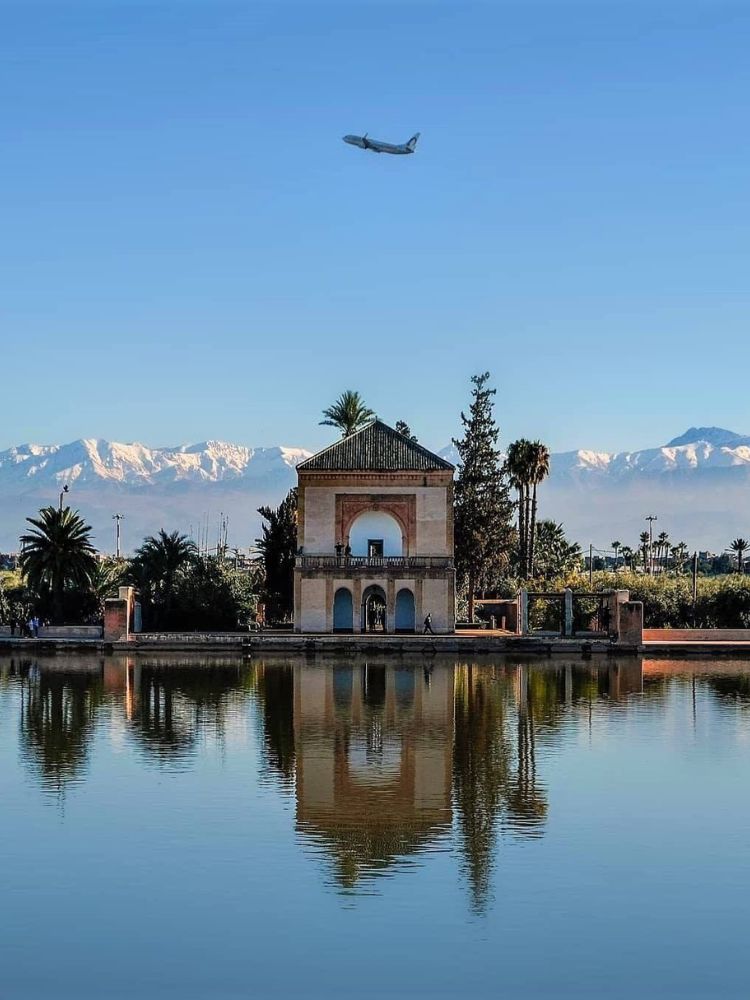
The final leg of our journey today takes us over the Tizi n’Tichka Pass, the highest mountain pass in North Africa at 2,260 meters. The road winds through the High Atlas, offering dramatic vistas of snow-capped peaks and Berber villages tucked into the valleys. This is one of the most scenic drives in the world. As we descend the mountains, the air becomes warmer and the landscape greener until we finally see the Koutoubia minaret on the horizon. We arrive in the vibrant “Red City” of Marrakech in the late afternoon, ready for the final chapter of our grand tour.
Marrakech is a city of magic, myths, and vibrant energy. Our guided tour begins at the Koutoubia Mosque, the largest in Marrakech, whose 12th-century minaret served as the model for the Giralda in Seville. We then visit the Saadian Tombs, a royal necropolis that remained hidden for centuries until it was rediscovered in 1917. The tombs are a masterpiece of wood carving and marble work, housing the remains of the Saadian dynasty rulers.
We continue to the Bahia Palace, which means “The Beautiful.” This 19th-century palace was intended to be the greatest of its time, featuring vast courtyards, shaded gardens, and rooms decorated with incredible painted ceilings and zellige tiles. It offers a fascinating look into the lives of the Moroccan elite during the late 19th century. After exploring the palace, we move to the Jewish Quarter (Mellah), with its unique architecture and history of religious coexistence.
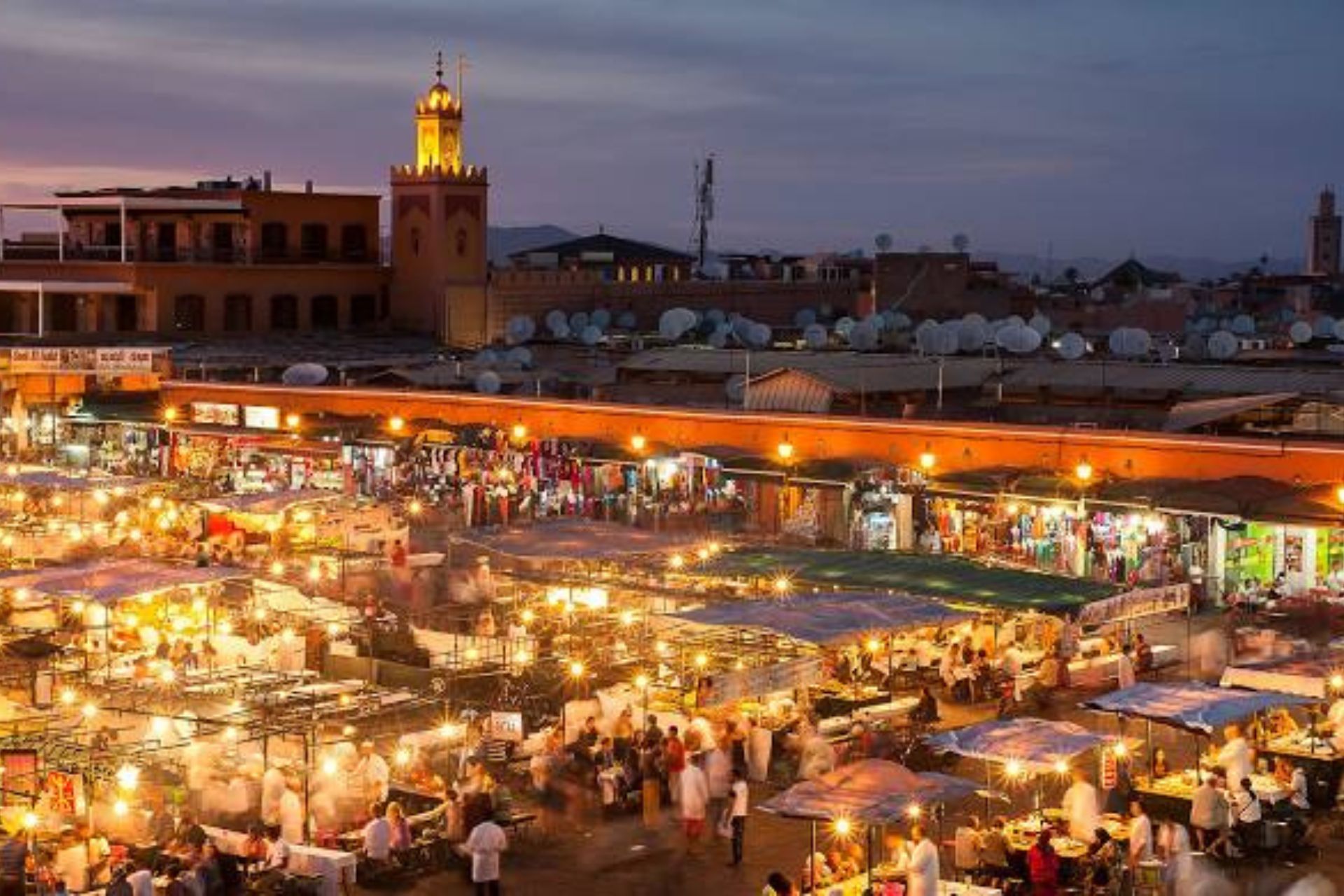
The afternoon is spent in the legendary Souks of Marrakech. This is a shopper’s paradise where you can find everything from handmade lanterns and leather bags to spices and traditional Berber jewelry. Our tour culminates at the Jemaa el-Fnaa Square, the most famous square in Africa. As evening approaches, the square transforms into a giant open-air theater filled with storytellers, snake charmers, musicians, and dozens of food stalls. The energy is electric, and the smells of grilled meats and spiced tea fill the air. You will enjoy dinner on a rooftop terrace overlooking the chaos and charm of the square below.
Today we head west to the Atlantic coast to visit Essaouira, a charming seaside town formerly known as Mogador. Essaouira is famous for its relaxed atmosphere, blue-and-white houses, and strong Portuguese and French influences. On our way, we pass through the Argan Forests, the only place in the world where Argan trees grow naturally. Keep an eye out for the famous “climbing goats” that stand on the branches of the trees to eat the Argan nuts. We will stop at a women’s cooperative to see how they extract the precious “liquid gold” oil by hand.
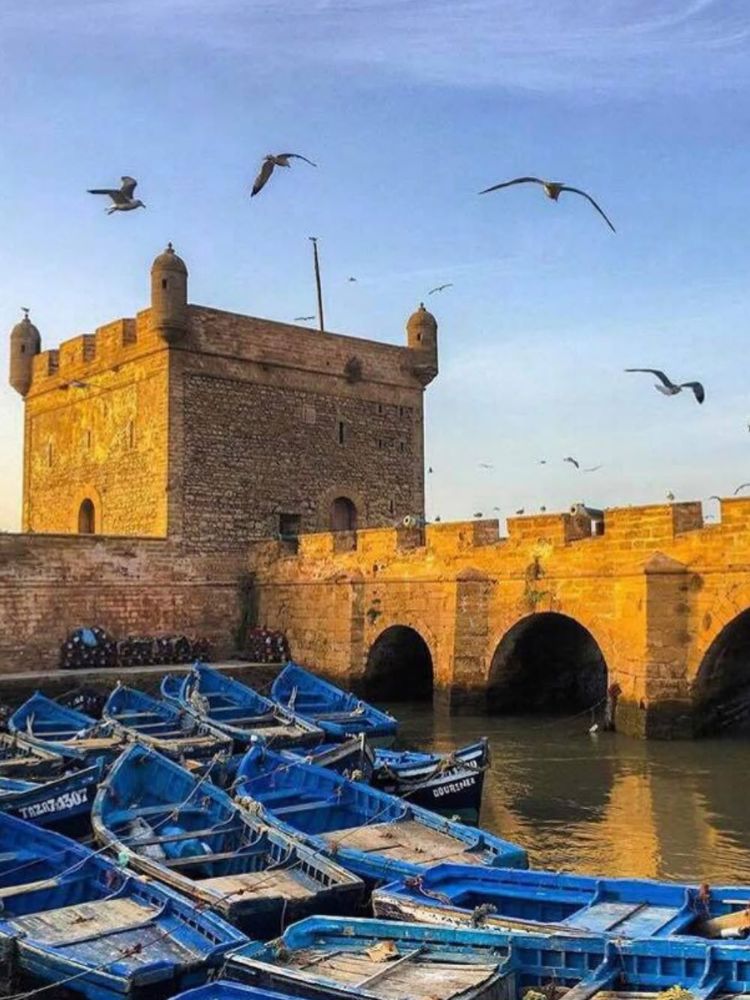
Upon arrival in Essaouira, you will be greeted by the cool sea breeze. We start at the Skala de la Ville, the impressive seaside bastions where ancient cannons still point toward the ocean. Fans of Game of Thrones will recognize these ramparts as the city of Astapor. We walk through the medina, which is much quieter and easier to navigate than Marrakech. Essaouira is a center for art and music, especially the Gnaoua Festival, and you will find many galleries and workshops showcasing local talent.
Lunch is a must at the fish market, where you can select your own fresh catch—sardines, sea bass, or calamari—and have it grilled for you on the spot. After lunch, you can walk along the expansive sandy beach, watch the colorful blue fishing boats in the harbor, or explore the Jewish Mellah. Essaouira is also famous for its Thuya wood carvings, and you will see craftsmen creating intricate boxes and furniture from this aromatic wood. We spend the night in a Riad in Essaouira, lulled to sleep by the sound of the Atlantic waves.
Enjoy a relaxing morning in Essaouira. You can take a final walk along the ramparts, shop for unique art, or enjoy a coffee at Place Moulay Hassan. The town is known for its silver jewelry and bohemian vibe, making it the perfect place for some last-minute gift shopping. For those interested in activities, Essaouira is a world-class destination for windsurfing and kite surfing due to the “Alizé” winds that blow year-round.
In the afternoon, we take the highway back to Marrakech. Upon arrival, you have a final opportunity to visit the Majorelle Garden. Once owned by Yves Saint Laurent, this botanical garden is a vibrant oasis of exotic plants and cobalt blue architecture. It is one of the most peaceful spots in the city and houses the Berber Museum, which showcases a stunning collection of jewelry and textiles.
Your final evening in Marrakech is yours to enjoy. You might want to return to Jemaa el-Fnaa for one last street food experience or choose one of the city’s many high-end restaurants for a farewell dinner. Marrakech is also famous for its Hammams (traditional steam baths). We highly recommend booking a spa session to relax and rejuvenate after your 13 days of travel. As you pack your bags, you will realize that Morocco has become more than just a destination; it has become a collection of stories, scents, and friendships that you will carry with you forever.
On your final day, depending on your flight schedule, you may have some free time for a last breakfast on your Riad’s terrace. This is a time for reflection on the incredible journey you have completed—from the Atlantic coast and the Rif Mountains to the medieval streets of Fes and the golden dunes of the Sahara. You have traveled through centuries of history and experienced the legendary hospitality of the Moroccan people.
Our team will provide a private transfer from your Riad to Marrakech Menara Airport or back to Casablanca Airport for your return flight. As you head to the gate, you’ll likely find yourself already planning your next visit. Whether it was the blue streets of Chefchaouen, the starry nights in the desert, or the chaotic charm of Marrakech that moved you most, Morocco is a country that stays in your heart long after you have left its shores. Safe travels, or as we say in Morocco, Trik Salama!
This Morocco tour from Casablanca is ideal for travelers who want:
-
A complete Morocco itinerary in 2 weeks
-
A private and customizable travel experience
-
Sahara Desert adventure with camel trekking
-
Cultural immersion in imperial cities
-
Scenic mountain and coastal landscapes
Book your 14 Days Grand Morocco Tour from Casablanca today and experience the best of Morocco in one unforgettable journey.
There are no reviews yet. Be the first one to write one.